
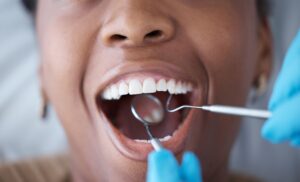
Many people know that brushing and flossing regularly helps reduce the risk of common oral health concerns, such as cavities and gum disease. But routine dental appointments every six months are also required to help protect and preserve your smile.
This is because your dentist has the expertise and equipment to quickly identify and treat issues that you might not even know existed. Continue reading to learn more about 3 potentially surprising things your provider does during standard checkups and cleanings to help you build and maintain happy, healthy teeth and gums!
#1: Examining Your Tongue
You probably expect your provider to visually assess the condition of your enamel and connective tissues during their examination, but some patients are shocked to learn that they are also likely to check the status of your tongue.
This powerful muscle in your mouth normally looks pink and should be relatively moist. If it’s discolored, coated in white, bright red, or has red or white patches, it could indicate a developing issue, such as dry mouth, vitamin deficiency, or even oral cancer. As you can see, your tongue health can quickly signal to your dentist whether other underlying concerns need their attention.
#2: Screening for Cancer
You might feel anxious or panicked if you hear your provider discussing oral cancer screenings, but this is often a standard part of routine visits and doesn’t necessarily mean there’s any cause for alarm. Once they’ve determined that your teeth and gums are healthy, your dentist will likely check the insides of your lips, cheeks, tongue, and throat for sores or ulcers that haven’t healed, thickened tissues, discoloration, or bleeding or numbness that can sometimes be early indicators of this dangerous disease.
But if they find any of these symptoms, it’s important not to jump to conclusions because they could also result from other concerns, like periodontal disease. Your dentist will likely investigate with additional scans, images, or testing to determine whether cancer is present and help devise a treatment plan.
#3: Evaluating Bite Alignment
You might not realize it, but your jaw alignment can significantly affect your dental health. For example, if your upper and lower arches don’t touch where they should when you bite down, you could eventually develop TMJ (temporomandibular joint) disorders from too much tension on the joints anchoring your jawbone to your skull. Uneven pressure from daily biting and chewing might also shift your teeth out of place, which can cause orthodontic issues or increase the risk of cavities and gum disease.
Your dentist helps prevent these concerns by taking routine X-rays to view your jaw alignment and ensure nothing is developing beneath the surface.
If you have additional questions about what to expect from your next routine checkup and cleaning, your dentist can provide more information when you call the office to schedule your visit.
Meet the Author
Dr. Caleb Goodman has over 10 years of experience helping patients build the happiest, healthiest versions of their smiles. He earned his Doctor of Dental Medicine degree from Midwestern University, and today, he proudly provides a comprehensive menu of services, including checkups and cleanings, using advanced technology for more comfortable, accurate outcomes. If you’re concerned about your dental condition, you can request an appointment on the website or by contacting the office at (623) 925-8822.