
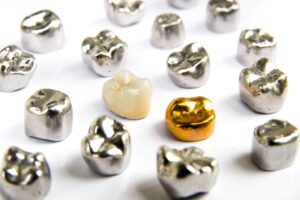
If you have a cracked or decayed tooth that can’t support itself, you need a dental crown to repair the problem and restore your smile. Like most people, you probably want something pleasing to the eye that also offers superior protection. Believe it or not, not all restorations are created to look the same. Dentists rely on various materials to build dental crowns that fit patients’ smiles perfectly. How can you know which one is right for you?
What Are the Different Types of Dental Crowns?
Your dentist tells you that you need a dental crown to address a troubled tooth and begins explaining the different materials used to create your new restoration. You’re not alone if you feel a bit confused by all the information, but here’s a brief explanation of each:
- Gold Crowns: Gold crowns are more commonly used for posterior (back) teeth because they can withstand chewing forces. They are durable and strong, but they are visible. Fortunately, because they are on back teeth, most people do not notice them.
- Porcelain Crowns: Porcelain crowns are known for their lifelike appearance and how well they look as front teeth. They are moderately durable, which is why they’re best placed on teeth that don’t endure as much chewing and biting as others.
- E-Max Crowns: An E-max crown is made of lithium disilicate, an all-ceramic crown that is thin, light, and comfortable to wear. They are also strong and durable and are commonly placed toward the back of the mouth.
- Zirconia Crowns: Zirconia crowns can be placed on front and back teeth and offer aesthetics and strength and are considered long-lasting.
- Porcelain Fused to Metal Crowns: Offering strength because of the metal structure and beauty because of the porcelain that mimics natural enamel, porcelain fused to metal crowns last long. They also bond well to teeth and can be used throughout the mouth.
Which Type of Dental Crown is Right For You?
Choosing the right dental crown isn’t something you have to figure out on your own. Your dentist will meet with you to discuss the extent of your tooth’s damage or decay and decide which material is best. They’ll consider your preferences and budget, but at the end of the day, fitting you with the right dental crown will not only better protect your smile but also ensure long-lasting results.
This will help you avoid complications (reinfection or more damage) and possible extraction down the road.
With so many materials available, you and your dentist can easily choose the right dental crown for your smile. When you consider its strength, appearance, and comfort, you’ll enjoy long-term confidence in your oral health.
About the Author
Dr. Caleb Goodman earned his dental degree from Midwestern University. He is the proud owner of Goodman Dental and is the dentist for the Cincinnati Reds & Cleveland Guardians baseball teams and staff. With more than a decade of experience, he prioritizes patients’ oral health by fixing their dental issues, relieving pain, and improving smiles. If you need a dental crown to repair a broken or decayed tooth, visit our website or call (623) 925–8822 to schedule an appointment.